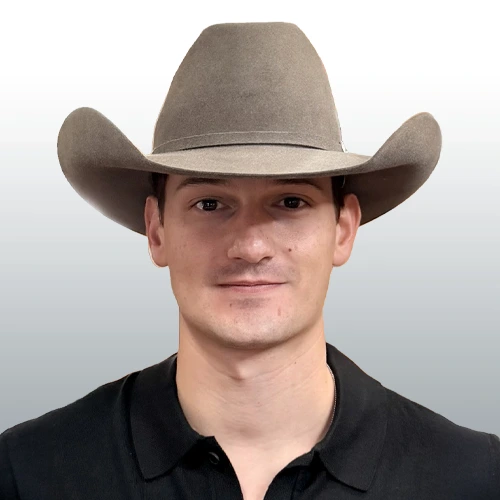
I lead global blockchain strategy at Nuvei, a payments platform operating in 200+ markets. My focus is on converging stablecoin settlement, on-chain FX, and tokenized financial products to keep value where it's created — and enable genuine global economic participation.
The industry conversation around stablecoins oscillates between uncritical evangelism and dismissive skepticism. The reality is more nuanced. Stablecoin settlement creates measurable advantages in specific corridors — marketplace payouts, airline settlements, Latin American cross-border flows — where it reduces working capital constraints and speeds up time-to-settlement. In other corridors, it adds cost and complexity.
The strategic opportunity isn't replacing traditional rails. It's building a settlement layer that integrates stablecoins, local payment methods, and on-chain foreign exchange into a single orchestration platform — starting at the card network level and extending outward. At Nuvei, that's what we're building: the infrastructure that lets businesses settle in the right instrument for each corridor, automatically.
Regulatory clarity, strong KYB/KYC, and institutional-grade compliance aren't obstacles to crypto adoption — they're prerequisites. The companies that treat compliance as a moat rather than a burden will win disproportionately over the next three to five years.
The stablecoin settlement layer is foundational, but it's not the endgame. The next major blockchain innovation is combining capital markets infrastructure with stablecoin payments to enable businesses to earn yield on idle capital — transforming treasury management from a cost center into a strategic advantage.
Today, large multinational corporations routinely repatriate funds out of emerging markets due to currency volatility risk. The paradox is striking: these are the exact markets they want to grow in. By extracting capital from these economies, corporations drain value from the very communities generating economic output on their behalf. The workers, suppliers, and local businesses that produce value for global enterprises don't benefit proportionally from the wealth they help create.
From a first-principles perspective, energy into a system should produce an equal or greater output. This is not what happens in the global economy. Capital flows uphill — from emerging markets to a handful of developed nations — not because of market efficiency, but because the infrastructure to safely deploy, manage, and earn yield on capital in-market doesn't exist at the speed, transparency, or risk profile that corporate treasurers require.
Blockchain changes this equation fundamentally. By enabling 24/7 funds movement with stablecoins, eventual on-chain foreign exchange, and tokenization of localized securities, treasuries, and other financial products, we create an infrastructure stack where businesses can keep capital deployed in the markets that generated it — earning yield, maintaining liquidity, and participating in local economic growth rather than extracting from it.
The implications extend far beyond corporate treasury optimization. When capital stays in emerging economies instead of being repatriated, it creates a multiplier effect: local businesses access more credit, local securities markets deepen, local currencies stabilize against the increased reserve backing, and local populations gain genuine participation in the global financial system. Everyone is connected through the internet, but most of the world still cannot participate in global markets from a beneficial monetary perspective. This infrastructure changes that.
Named as co-inventor on six blockchain and digital payments patent applications filed by Visa International Service Association — spanning single-use digital assets, cross-border stablecoin remittance, non-custodial wallets, smart contract verification, and blockchain-based transaction processing.
I also guest lecture on payment technologies, Web3, and entrepreneurship at universities. For speaking inquiries, get in touch.
Growing up in Wales, Wisconsin, I was the kid who got bullied — and the kid who responded by building things. I started investing in the stock market at nine, founded my first LLC at eleven, and launched a video production company at twelve. By seventeen, I was running Explicit Gum, a socially conscious brand where every pack sold funded anti-bullying campaigns and childhood cancer research, assembled by over 200 individuals with disabilities through Easter Seals.
At Baylor University, a study-abroad semester in Rwanda changed everything. In a village without Wi-Fi or data, I watched people use mVisa and M-PESA to transact via simple text messages. My friends and I couldn't even split dinner. That friction — the gap between who has access to financial infrastructure and who doesn't — became the problem I wanted to solve. I came home and built The Odyssey Project: an AI-powered SMS payment platform designed for the unbanked, created in partnership with Visa through their Fintech Fast Track program.
After earning my M.S. in Technology Commercialization at UT Austin — where I was voted Outstanding Student by the faculty — I joined Dell Technologies as a software engineer, then moved to Visa's Global Crypto Products team during the 2021 institutional wave. At Visa, I co-invented six blockchain patents, was named in published research on paying gas fees with cards, and helped build the infrastructure connecting card networks to on-chain settlement.
Today at Nuvei, I lead global blockchain strategy — working to converge stablecoin settlement, on-chain FX, and tokenized financial products into the infrastructure that keeps value where it's created. The through-line from Rwanda to Nuvei is the same conviction: the financial system should work for everyone, not just the people who already have access to it.
Outside of work, I'm a marathon runner (3:37 at the 2026 Austin Marathon, chasing sub-3:15), a former state championship soccer player at Kettle Moraine High School, a published author of two books, and a dog dad to Lucy. My faith grounds me — Luke 14:11 is in my bio for a reason. I live in Austin, Texas.
A lifelong builder. The ventures have changed — the values haven't.
Writing, research, and published work — past and future.